
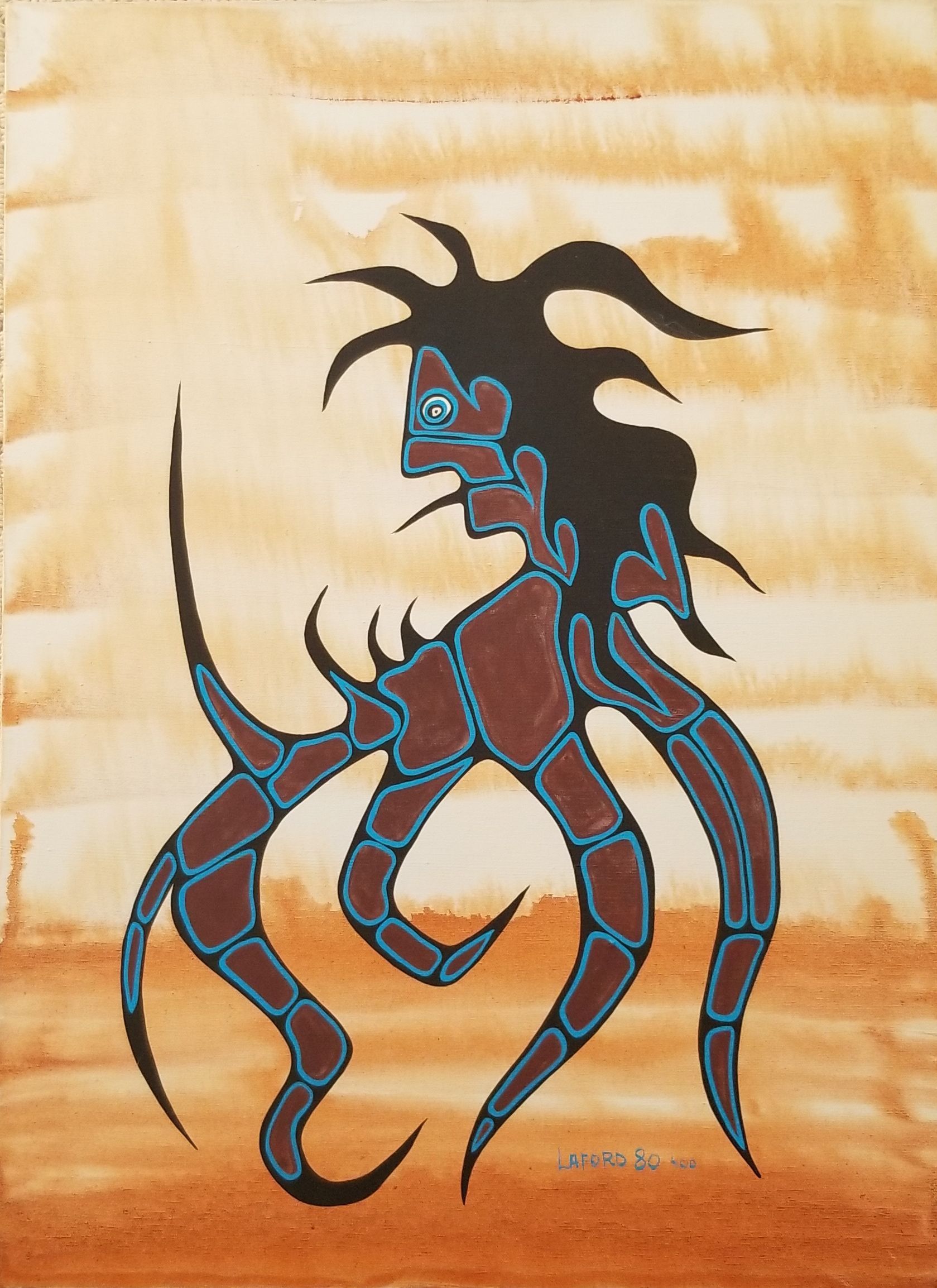
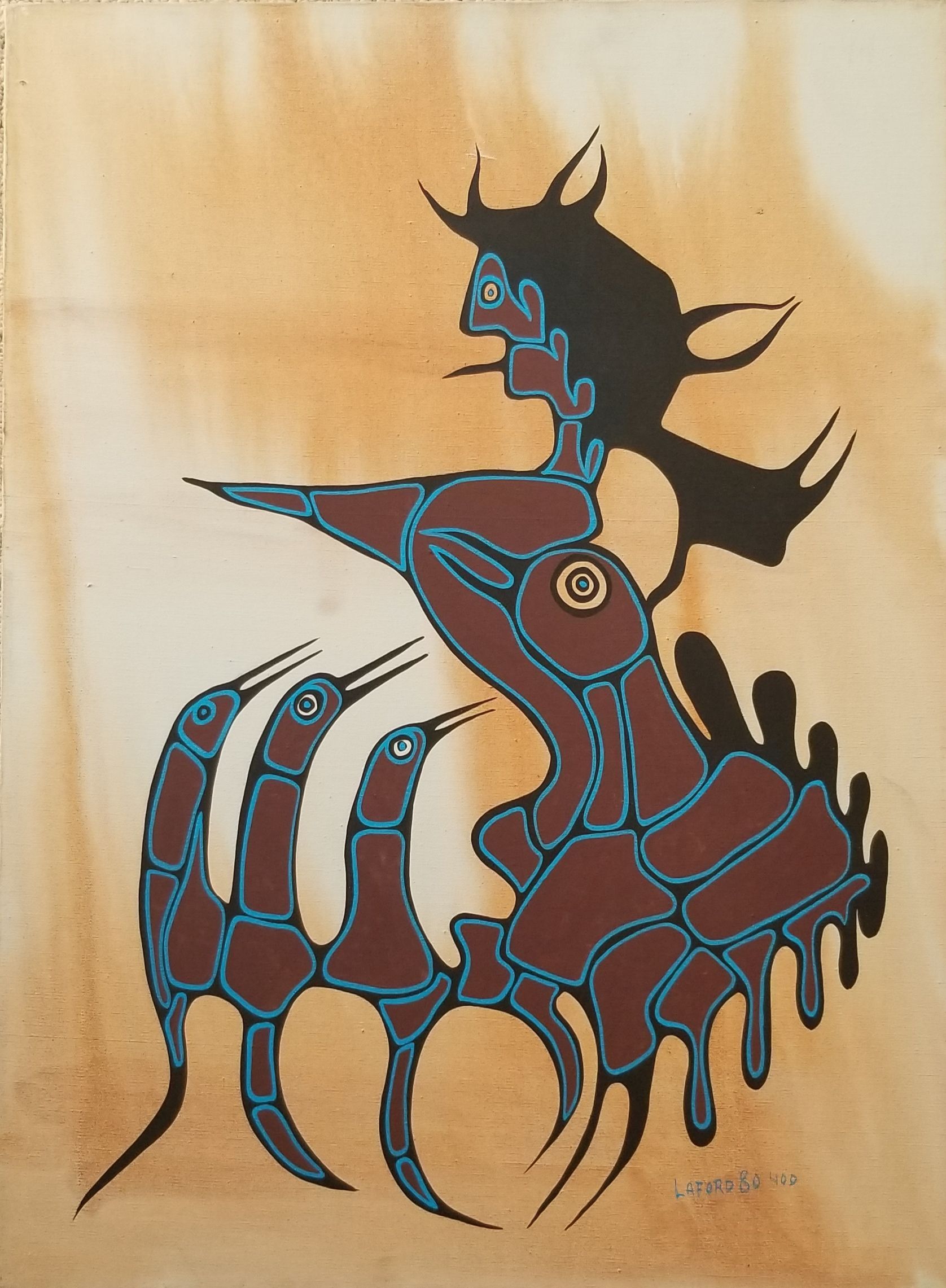
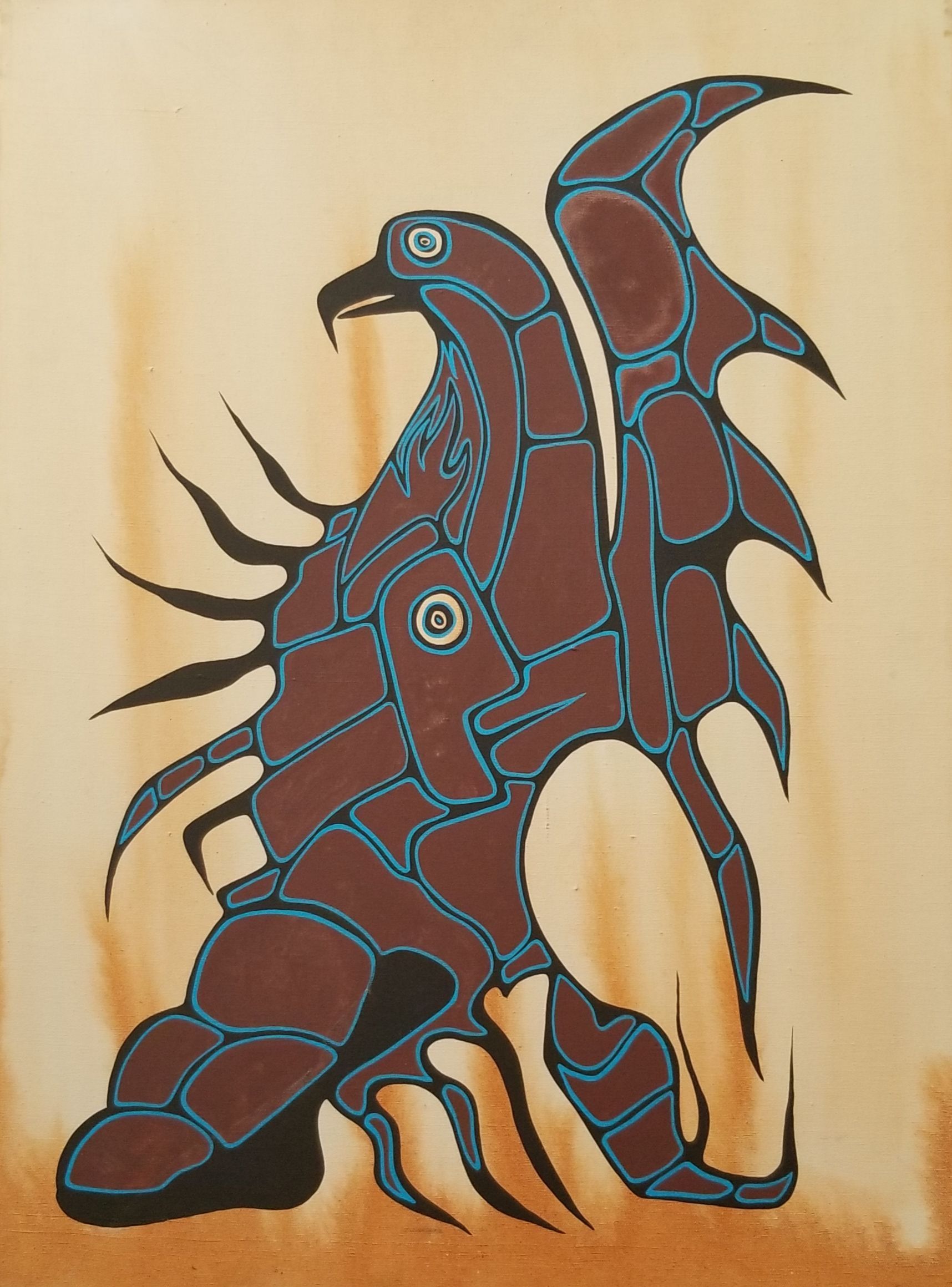
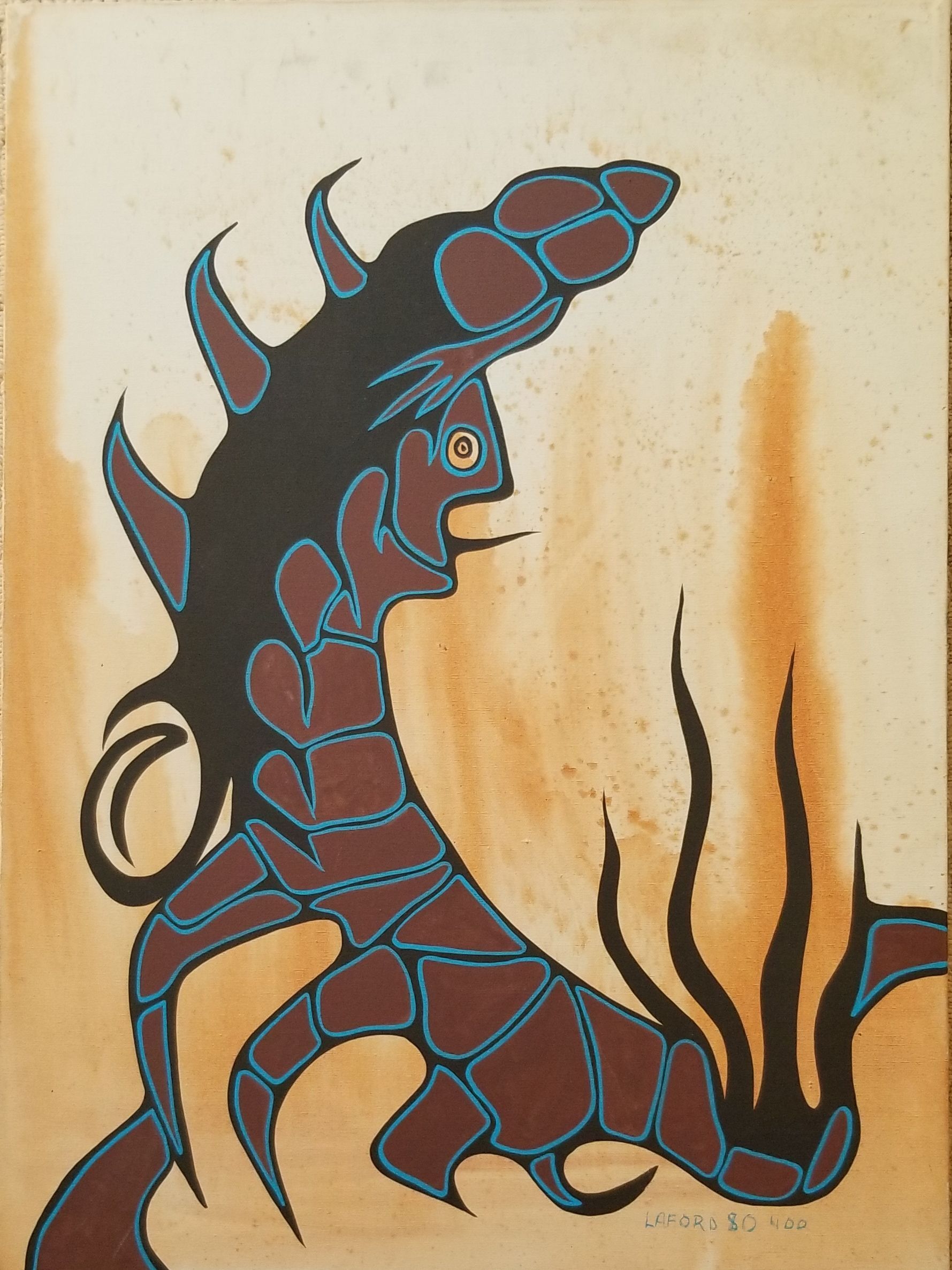
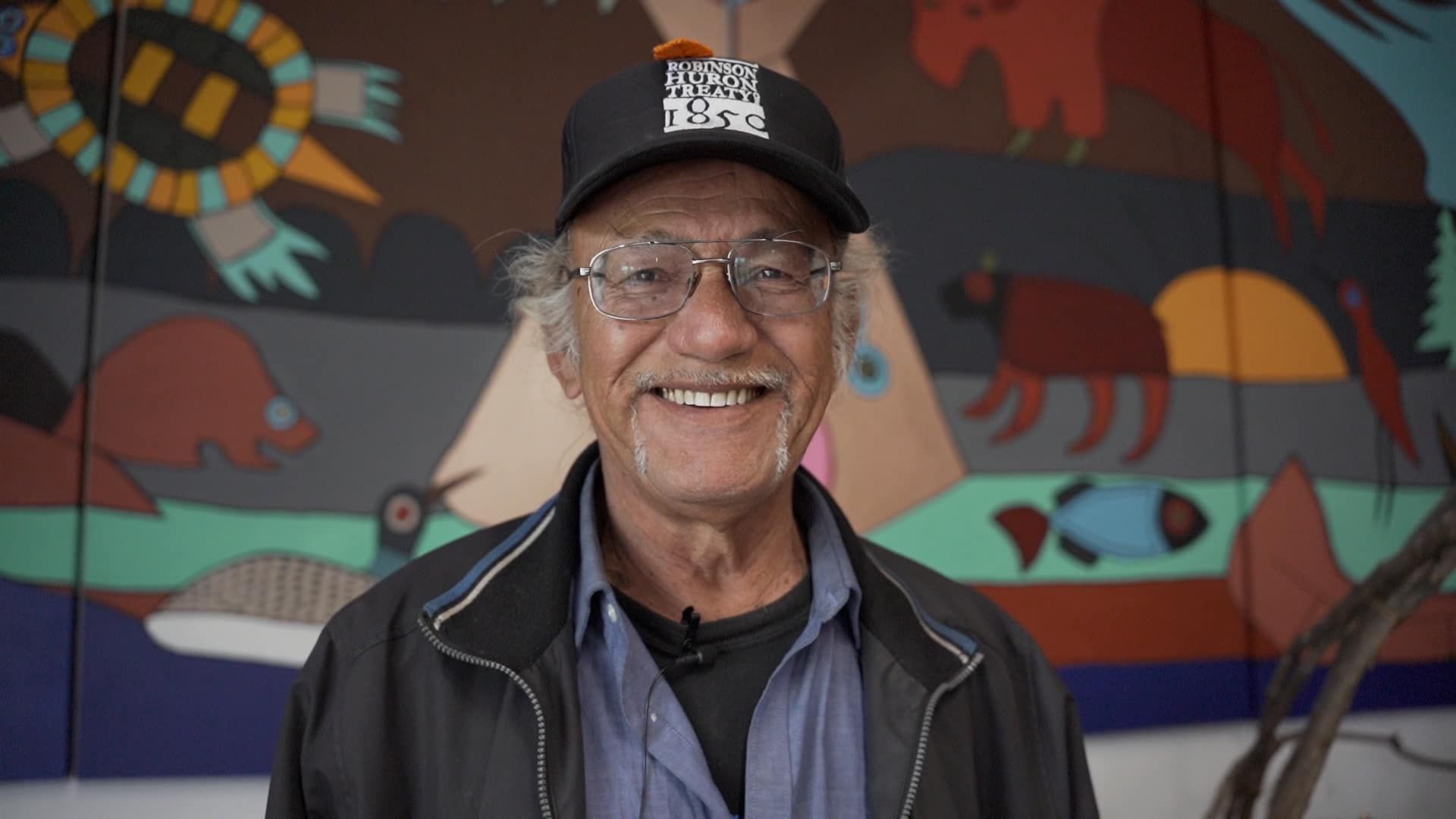
John Eric Laford was a celebrated Anishinaabe artist from M’Chigeeng (formerly West Bay) on Manitoulin Island, Ontario. Through his art, he carried forward the teachings, stories, and legends of the Ojibwe Anishinaabe First Nations, drawing deeply from his cultural heritage and ancestral roots. As the grandson of hereditary Chief Dominic Migwans and Anne Commanda, Laford’s creative journey was inseparable from the traditions and history of his people.
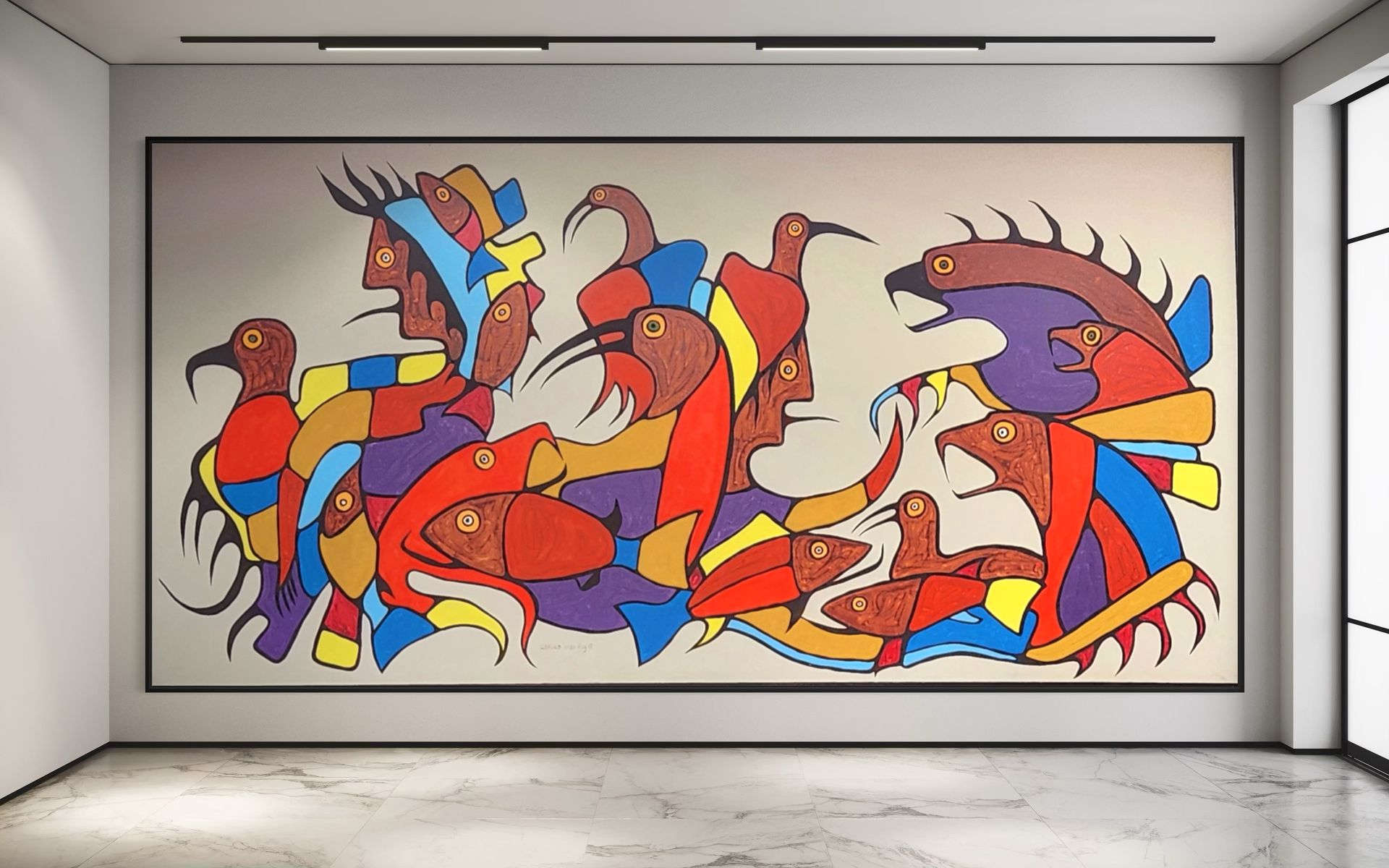
Laford brought the visions, stories, and legends of his elders to life through magnificent paintings. He worked with diverse materials, including paper, birch bark, canvas, pine, cedar, and pipestone, creating poignant studies of creation that encompassed spirits, elders, animals, birds, and plants. His vivid colours and intricate geometric compositions vividly narrated the interconnectedness of the animal and spirit worlds.
From 1989 to 1990, Laford was selected as one of only two First Nations artists by the Canada Council's Visual Arts Section for the National and International Studies Art Program. A Canada Council award enabled him to travel across Canada, the United States, and Spain, where his talents were evaluated by the prestigious P.S. 1 Contemporary Art Centre in New York. From 1995 to 1996, Laford was a sessional lecturer on Ojibwe art and culture at Algoma University in Sault Ste. Marie.
Laford's paintings are featured in museums across Canada, the U.S., and Australia and are part of private collections worldwide. From 1977 to 2010, his work was exhibited internationally in cities across the U.S., including New York, New York; Santa Fe, New Mexico; and Petoskey, Michigan. In Europe, his exhibitions were held in Vienna, Austria; Fribourg, Switzerland; Bad Nauheim, Hesse, Germany; and Ibiza, Balearic Islands, Spain. In Canada, his work was showcased in Vancouver, British Columbia, and Montreal, Quebec.
Notable Exhibitions
1982
- Spirits in the Rock — An exhibition of paintings by Ojibwe artist John Eric Laford
- Museum of Anthropology at UBC — Vancouver, British Columbia, Canada
Other Exhibitions
- Royal Ontario Museum — Toronto, Ontario, Canada
- Canadian Museum of Civilization — Hull (now Gatineau), Quebec, Canada
- MoMA PS1 (Institute of Contemporary Art, P.S.1.) — New York, USA
- Barcelona, Spain
- Sault Ste. Marie, Ontario, Canada
1989–1990
- Museum of Modern Art — Manhattan, New York, USA
Laford’s legacy endures as a vivid testament to his talent, culture, and storytelling, celebrating Anishinaabe traditions and the interconnectedness of all life.
John Eric Laford était un artiste anishinaabe renommé originaire de M’Chigeeng (anciennement West Bay) sur l’île Manitoulin, en Ontario. À travers son art, il a transmis les enseignements, histoires et légendes des Premières Nations Ojibwe Anishinaabe, puisant profondément dans son patrimoine culturel et ses racines ancestrales. En tant que petit-fils du chef héréditaire Dominic Migwans et d’Anne Commanda, le parcours créatif de Laford était indissociable des traditions et de l’histoire de son peuple.
Laford a donné vie aux visions, histoires et légendes de ses aînés à travers des peintures magnifiques. Il a travaillé avec divers matériaux, dont le papier, l’écorce de bouleau, la toile, le pin, le cèdre et la stéatite, créant des études poignantes de la création qui incluaient esprits, aînés, animaux, oiseaux et plantes. Ses couleurs vives et ses compositions géométriques complexes racontaient de manière saisissante l’interconnexion entre le monde animal et le monde des esprits.
De 1989 à 1990, Laford a été sélectionné comme l’un des deux seuls artistes des Premières Nations par la section des arts visuels du Conseil des Arts du Canada pour le Programme d’études nationales et internationales en arts. Une bourse du Conseil des Arts du Canada lui a permis de voyager à travers le Canada, les États-Unis et l’Espagne, où son talent a été évalué par le prestigieux P.S. 1 Contemporary Art Centre à New York. De 1995 à 1996, Laford a été chargé de cours à temps partiel sur l’art et la culture ojibwe à l’Université Algoma à Sault Ste. Marie.
Les peintures de Laford figurent dans des musées au Canada, aux États-Unis et en Australie et font partie de collections privées dans le monde entier. De 1977 à 2010, son travail a été exposé internationalement dans des villes des États-Unis, notamment New York, New York ; Santa Fe, Nouveau-Mexique ; et Petoskey, Michigan. En Europe, ses expositions ont eu lieu à Vienne, Autriche ; Fribourg, Suisse ; Bad Nauheim, Hesse, Allemagne ; et Ibiza, îles Baléares, Espagne. Au Canada, son œuvre a été présentée à Vancouver, Colombie-Britannique, et à Montréal, Québec.
Expositions Notables
1982
- Spirits in the Rock — Une exposition de peintures de l’artiste ojibwe John Eric Laford
- Musée d’anthropologie de l’UBC — Vancouver, Colombie-Britannique, Canada
Autres Expositions
- Musée royal de l’Ontario — Toronto, Ontario, Canada
- Musée canadien de l’histoire — Hull (aujourd’hui Gatineau), Québec, Canada
- MoMA PS1 (Institute of Contemporary Art, P.S.1.) — New York, États-Unis
- Barcelone, Espagne
- Sault Ste. Marie, Ontario, Canada
1989–1990
- Musée d’Art Moderne — Manhattan, New York, États-Unis
L’héritage de Laford demeure un témoignage éclatant de son talent, de sa culture et de sa narration, célébrant les traditions anishinaabe et l’interconnexion de toute vie.
