
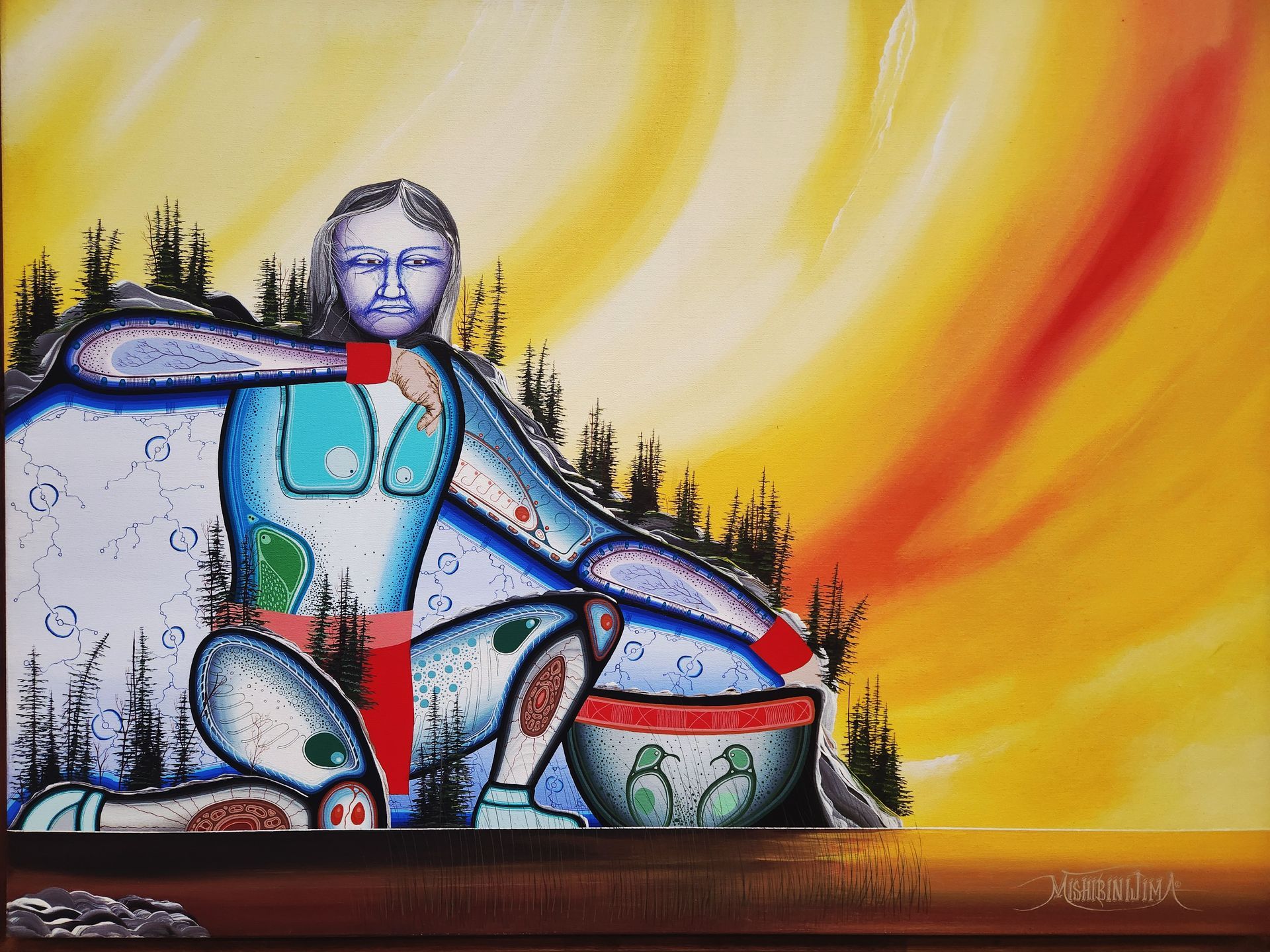
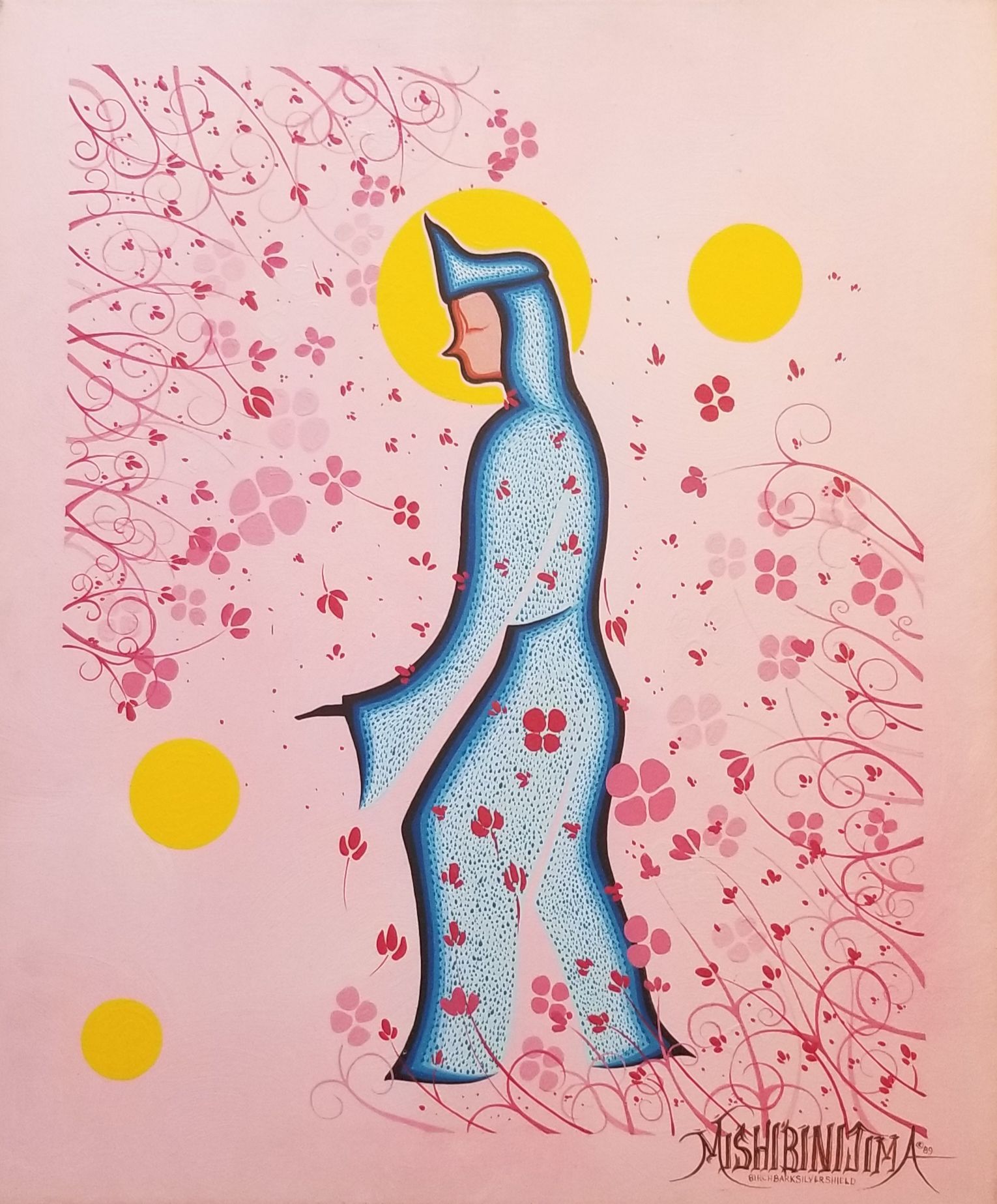
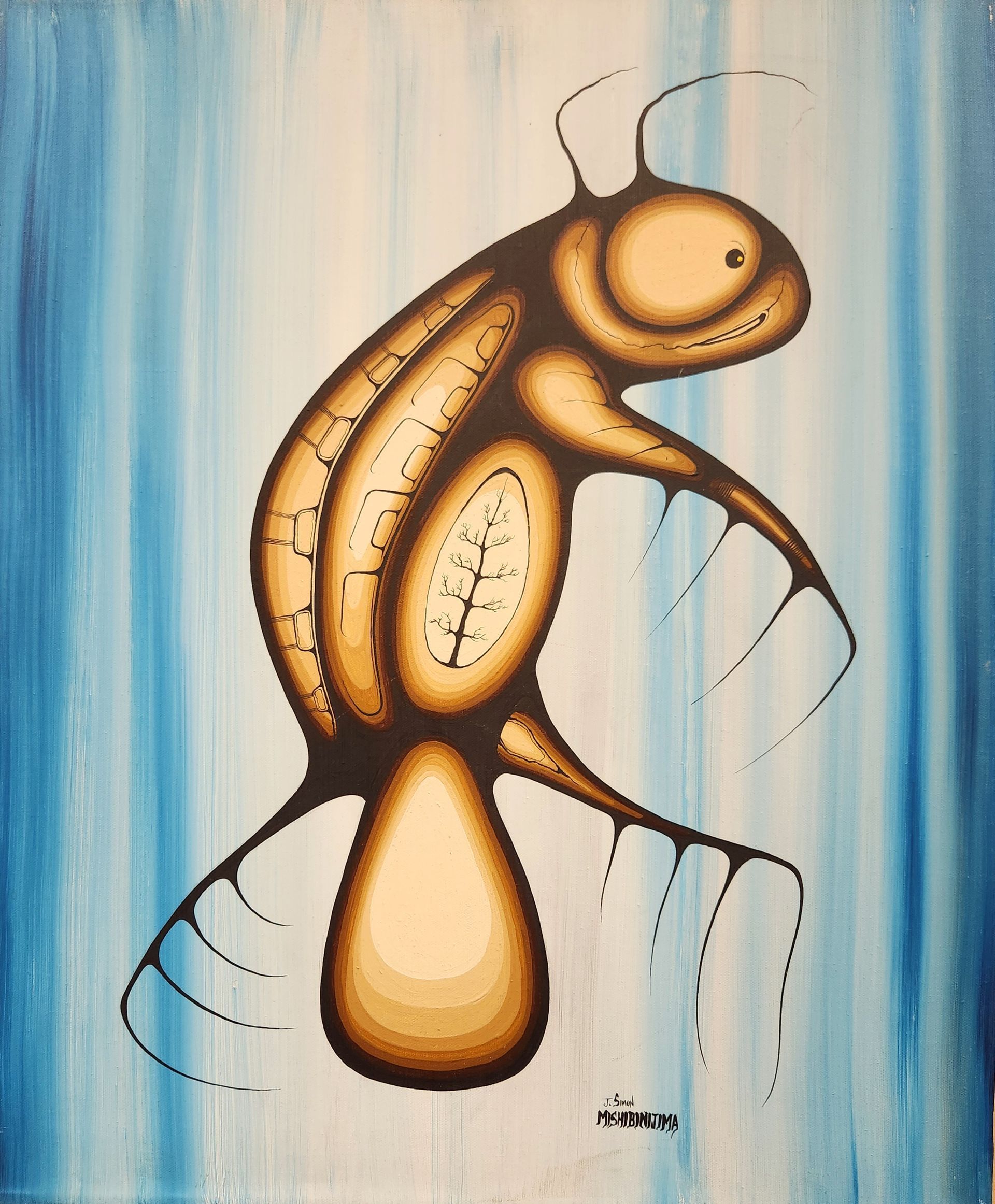
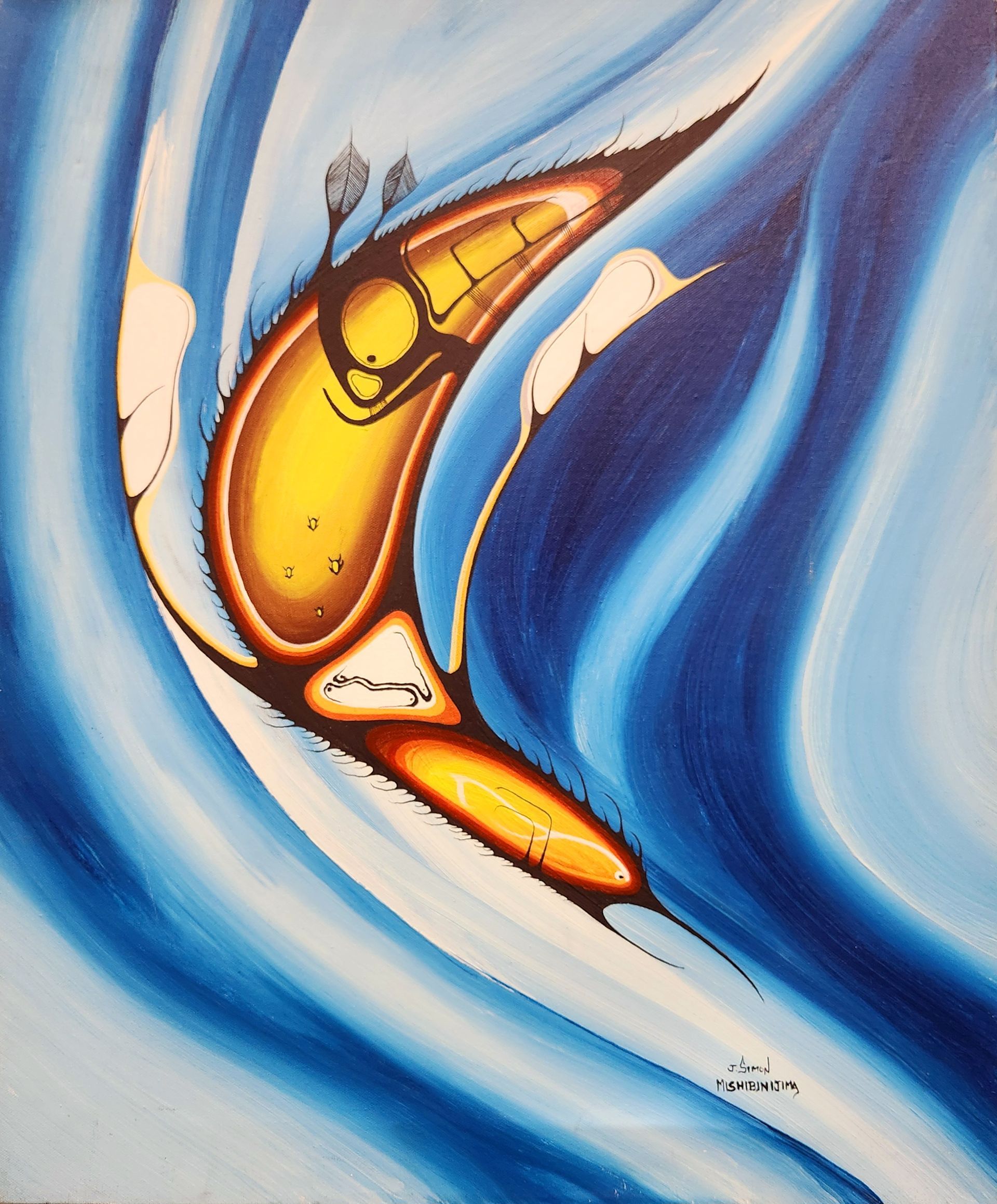
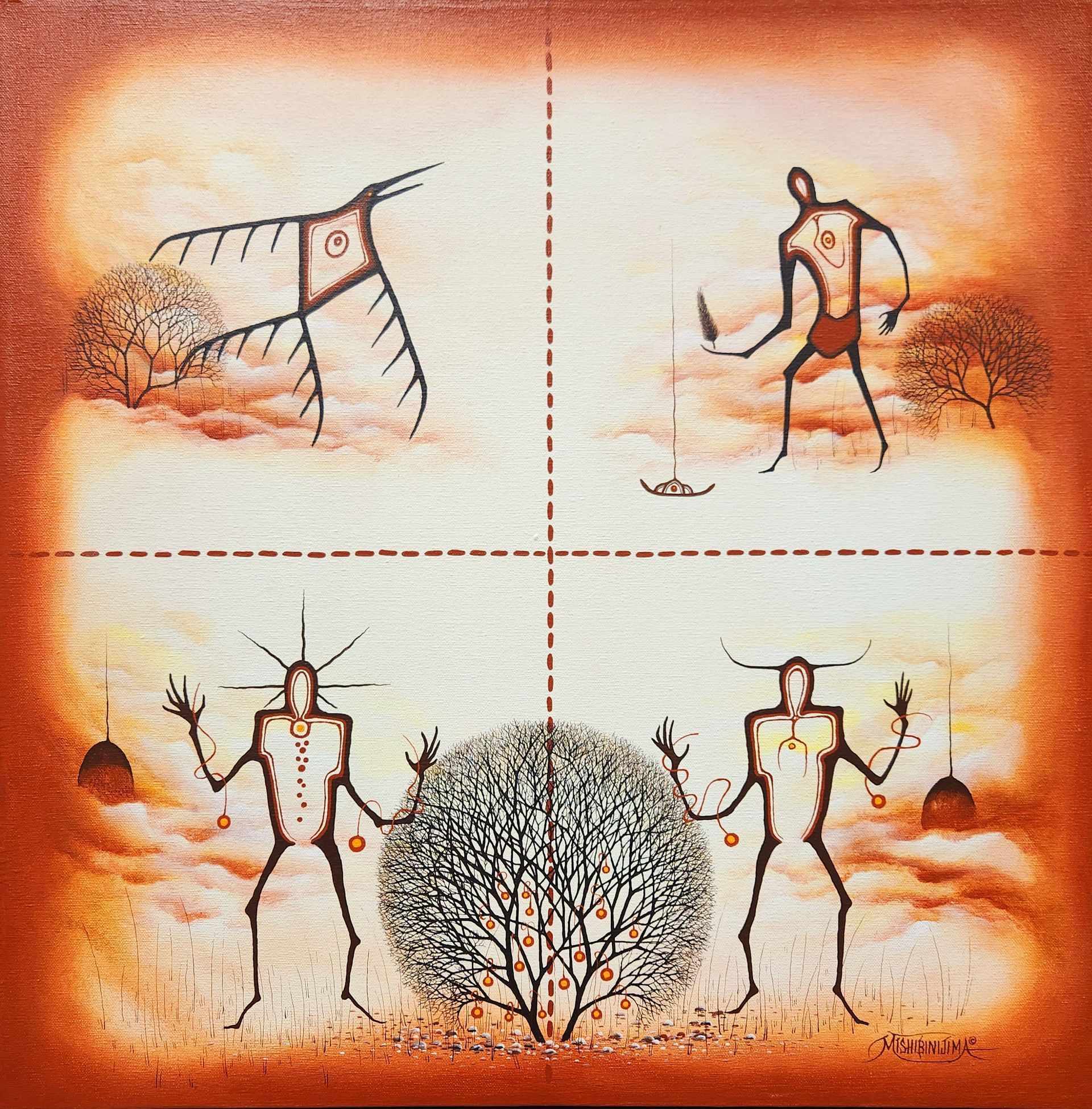

James Mishibinijima, born on February 12, 1954, in the heart of Wikwemikong on Manitoulin Island, stands as one of Canada’s most eminent artists, weaving a mesmerizing tapestry of creativity deeply rooted in the profound traditions of the Ojibwe people. Mishibinijima’s artistic journey spans decades, marked by an unwavering commitment to exploring diverse art styles and mediums, each stroke echoing the whispers of his ancestors and the sacred landscapes that have shaped his identity.
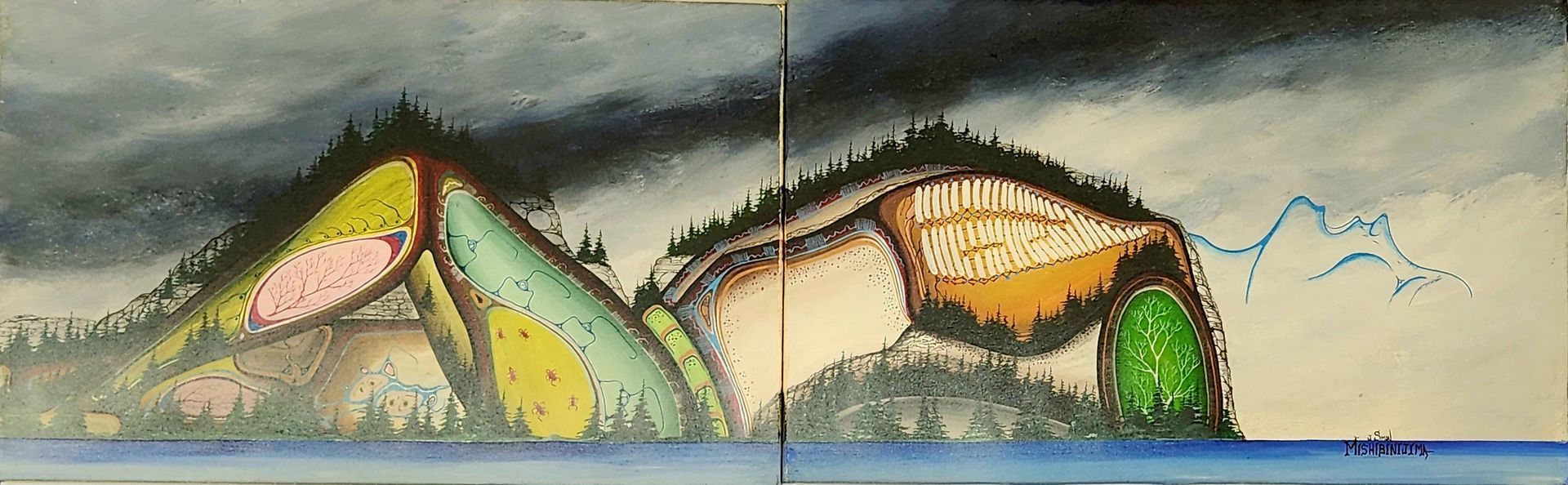
From the vibrant hues of the 1970s to the present day, Mishibinijima’s odyssey as an artist has been a pilgrimage to the sacred landscapes of Manitoulin Island, inspiring iconic series such as the transcendent "Mishmountain." His oeuvre resonates profoundly with audiences, offering solace and transcendence amidst life's myriad trials and uncertainties. Through his evocative paintings, Mishibinijima channels a profound philosophy of interconnectedness, urging humanity to cherish and safeguard the natural world for generations yet unborn.
A pinnacle in Mishibinijima’s illustrious career arrived with a prestigious commission from Pope John Paul II, facilitated by the Bishop Jean-Louis Plouffe of the Roman Catholic Diocese of Sault Sainte Marie. The resulting masterpiece, titled ‘My Rock,’ now graces the Vatican Museum’s permanent art collection, a testament to Mishibinijima’s profound artistic vision and spiritual resonance.
The unveiling of ‘My Rock’ in the venerable city of Rome in October 2004 marked a deeply poignant moment for Mishibinijima and his cherished family, underscoring the global resonance of his art and the enduring power of cultural exchange. Throughout his illustrious journey, Mishibinijima has garnered international acclaim, his work serving as a timeless testament to the transcendent power of creativity and the enduring values of humanity, weaving together the threads of tradition and innovation in a vibrant tapestry of cultural expression.
James Mishibinijima, né le 12 février 1954 au cœur de Wikwemikong, sur l’île Manitoulin, est reconnu comme l’un des artistes les plus éminents du Canada. Il tisse une œuvre fascinante, profondément enracinée dans les traditions spirituelles et culturelles du peuple ojibwé. Le parcours artistique de Mishibinijima s’étend sur plusieurs décennies, marqué par un engagement indéfectible à explorer divers styles et médiums artistiques, chaque coup de pinceau résonnant comme un écho des voix de ses ancêtres et des paysages sacrés qui ont façonné son identité.
Des teintes vibrantes des années 1970 jusqu’à aujourd’hui, l’odyssée artistique de Mishibinijima représente un véritable pèlerinage vers les paysages sacrés de l’île Manitoulin, qui ont inspiré des séries emblématiques telles que la transcendante « Mishmountain ». Son œuvre touche profondément les spectateurs, offrant réconfort et élévation spirituelle au milieu des épreuves et des incertitudes de la vie. À travers ses peintures évocatrices, Mishibinijima exprime une philosophie profonde de l’interconnexion, invitant l’humanité à chérir et à protéger le monde naturel pour les générations à venir.
Un sommet de sa brillante carrière survient lorsqu’il reçoit une prestigieuse commande du pape Jean-Paul II, par l’intermédiaire de l’évêque Jean-Louis Plouffe du diocèse catholique romain de Sault-Sainte-Marie. L’œuvre qui en résulte, intitulée « My Rock », fait désormais partie de la collection permanente du Musée du Vatican — un témoignage éloquent de la vision artistique et de la résonance spirituelle de Mishibinijima.
Le dévoilement de « My Rock » dans la ville historique de Rome, en octobre 2004, a marqué un moment profondément émouvant pour Mishibinijima et sa famille, soulignant la portée universelle de son art et le pouvoir durable de l’échange culturel. Tout au long de son parcours illustre, Mishibinijima a acquis une reconnaissance internationale; son œuvre demeure un témoignage intemporel de la puissance transcendante de la créativité et des valeurs fondamentales de l’humanité, unissant tradition et innovation dans une tapisserie éclatante d’expression culturelle.
